
Behaviour – precision in every movement
Did you know your fish are constantly telling you how they’re feeling?
You just need to know where to look – and what to look for.
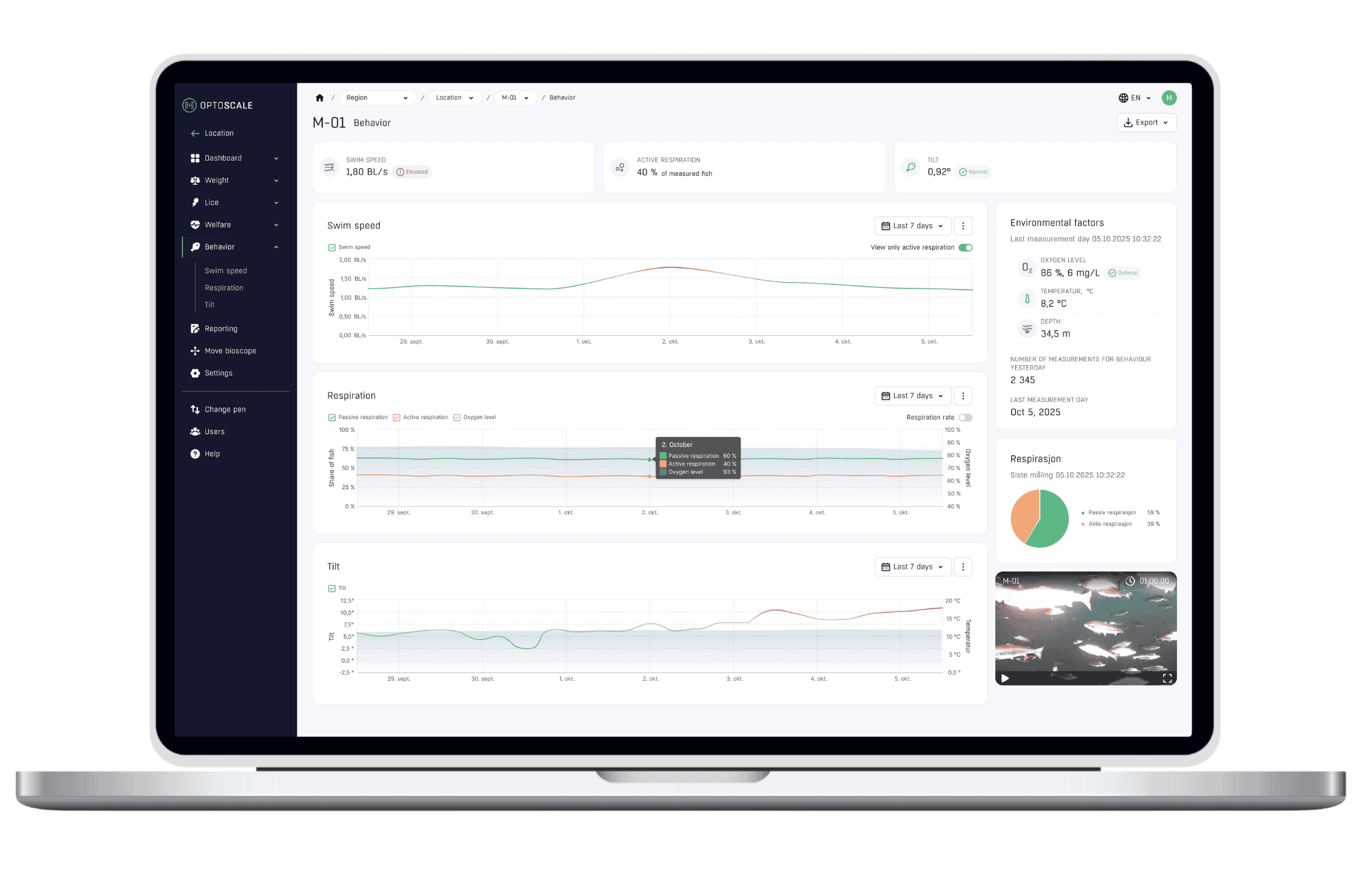
With OptoScale’s Behavior Module, you get real-time alerts the moment key indicators like respiration rate, swimming speed, or tilt begin to change – so you can act before small signals turn into big problems.
Respiration rate
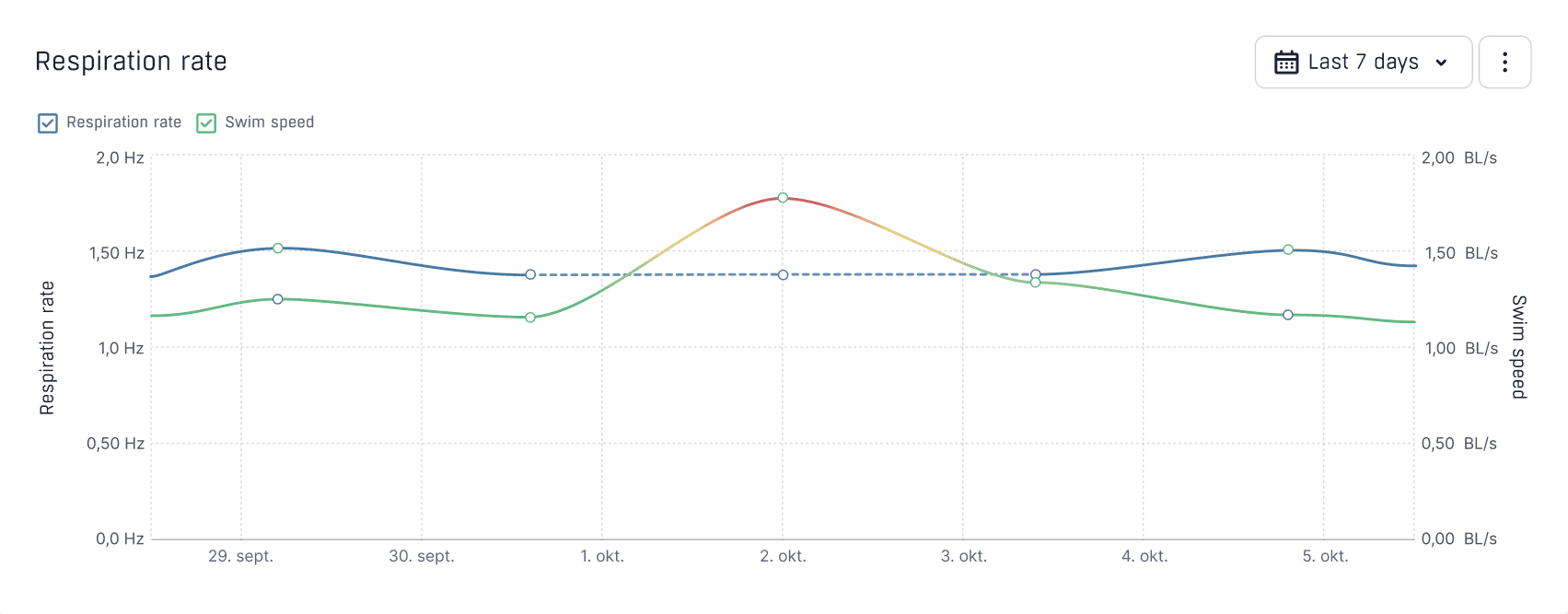
Changes in respiration often indicate that something is different in the fishes behaviour or pen environment. Catching these changes early allows you to prioritize actions and avoid unnecessary manual checks. This enables you to act before small changes have big consequences – especially when fish growth and health are at stake.
The role of respiration
Research carried out in Norway, such as GillWatch, shows that respiration rate can respond early to gill-related impacts, even when the changes are mild. Therefore respiration rate is a good signal to follow in periods where gill health is in focus.
OptoScale’s behavioral module follows respiration movements through short, precise video sequences in real time. This is how we capture the rhythm of breathing – not individual moments that may appear random.
Tilt
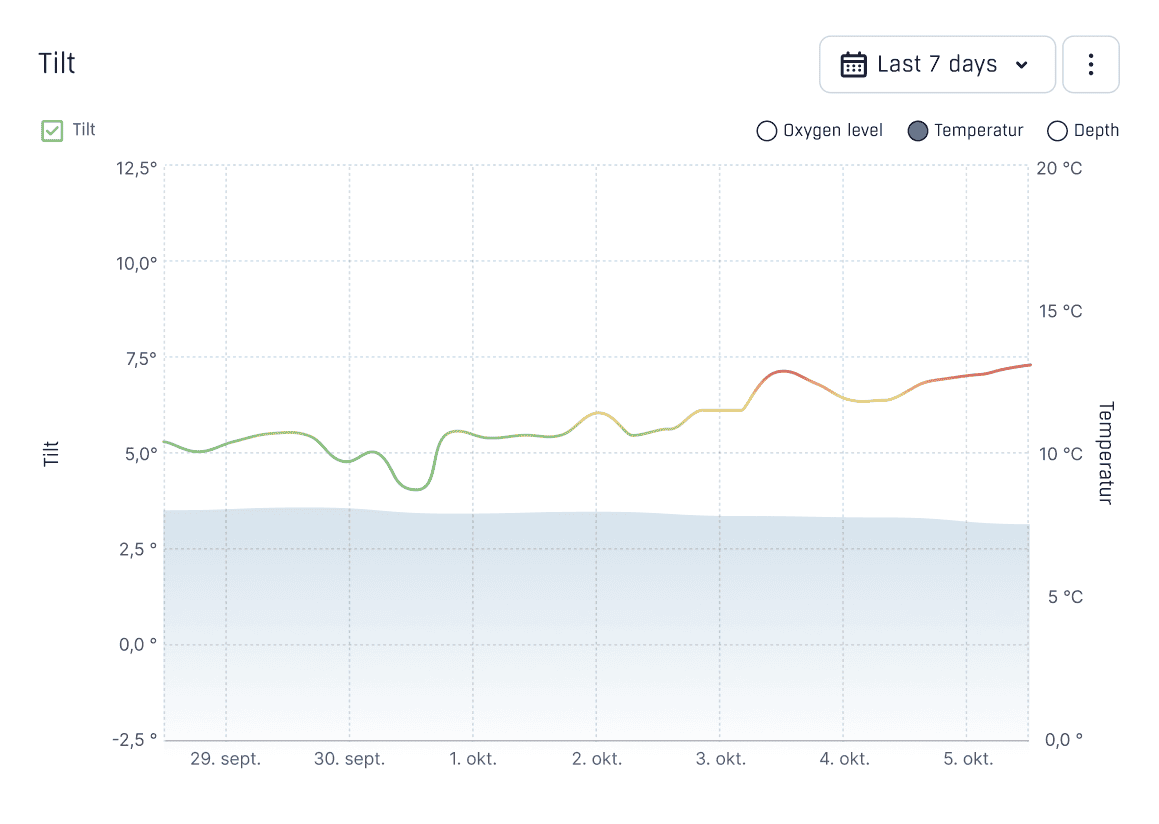
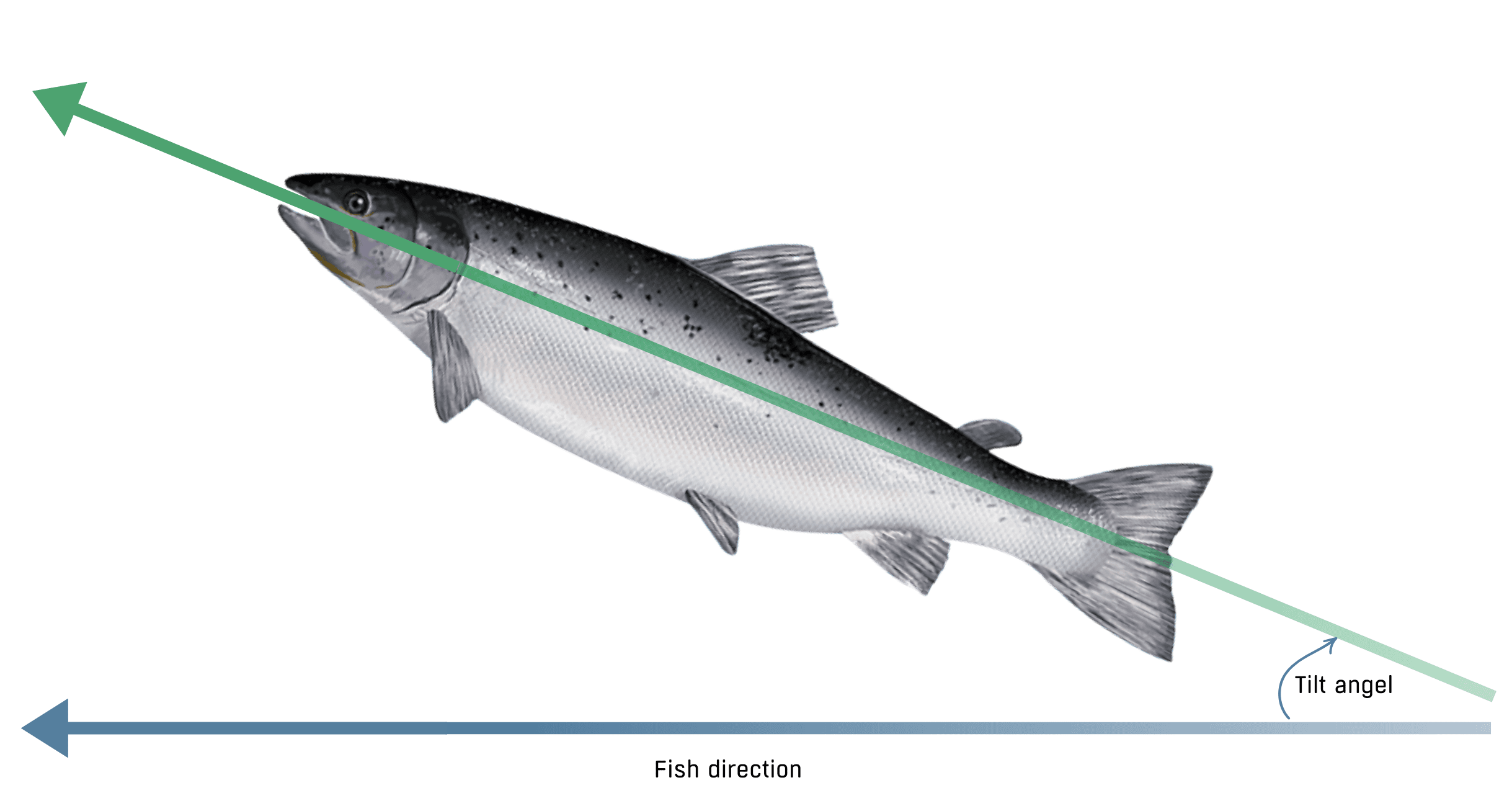
Tilt gives an indication of how the fish is positioned in relation to its forward momentum in the water column.
When the angle becomes unusually high or low, it may indicate that the fish is working harder than normal to stay stable – often due to changes in buoyancy, swim bladder filling, current or other conditions in the pen. This is particularly useful to monitor when submerged, where small changes over time can be difficult to detect manually, but have major consequences.
Tilt in real time
OptoScale’s behaviour module continuously analyzes the swimming angle through live video. In the web portal, tilt is displayed in real time, along with oxygen, temperature and depth. This allows you to quickly see when your fish are using more energy than normal – and follow up before it affects welfare or growth.
Swim speed
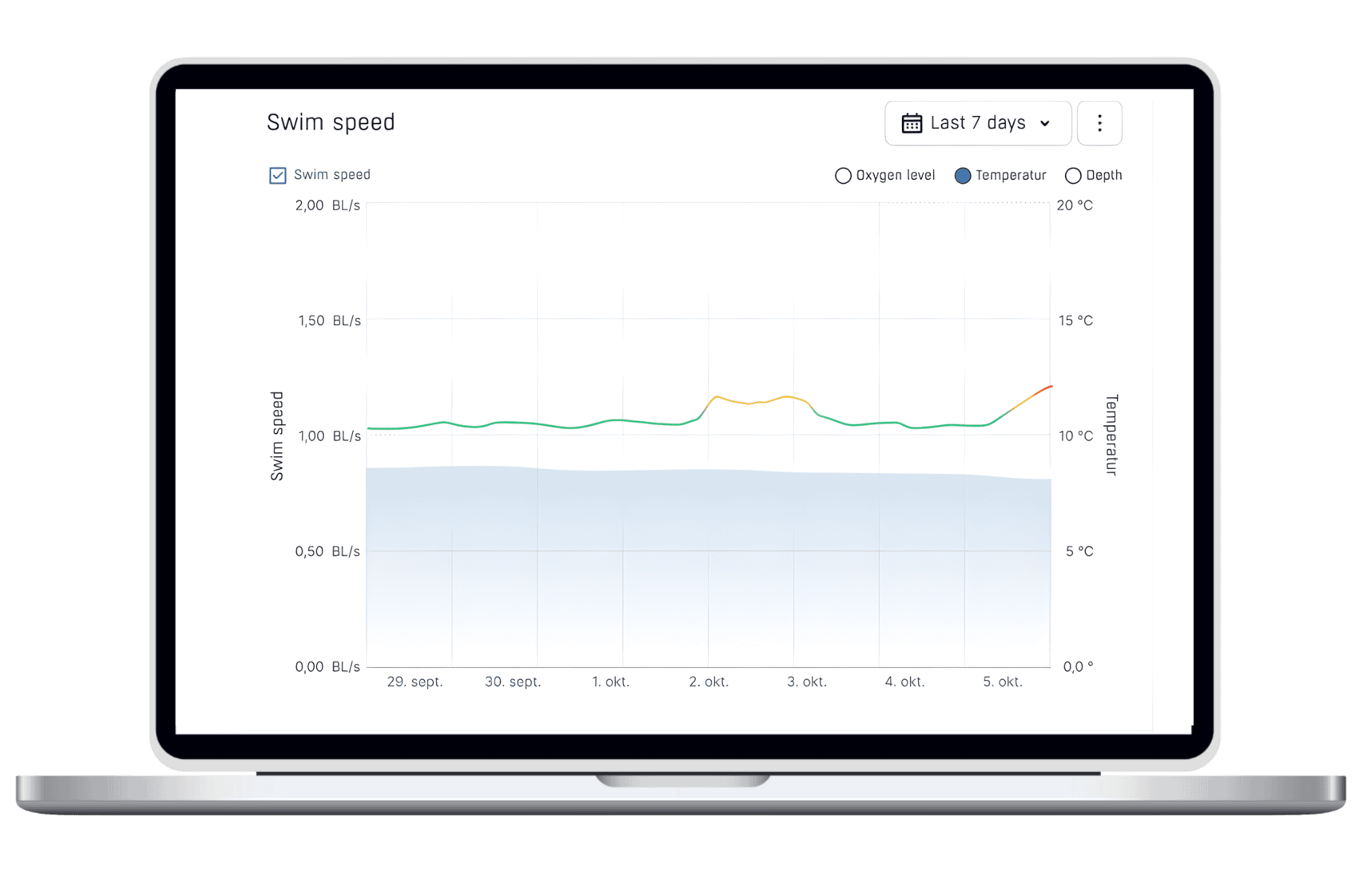
When fish swim faster than normal, it’s often a sign of stress – for example, low oxygen, high currents, temperature changes or biological influences. Swim speed and breathing rate are closely linked and give you a more comprehensive picture of fish welfare and stress levels.
Stable measurements – clear insights
The behaviour module analyzes movement patterns in real-time video and gives you precise insight into swim speed at group level. You can quickly see if activity is changing and link it to oxygen, temperature and depth in the web portal.
When you consider all behaviour data in one module, you can act quickly – and focus on what really matters.
See the fish. See the environment. Understand more.
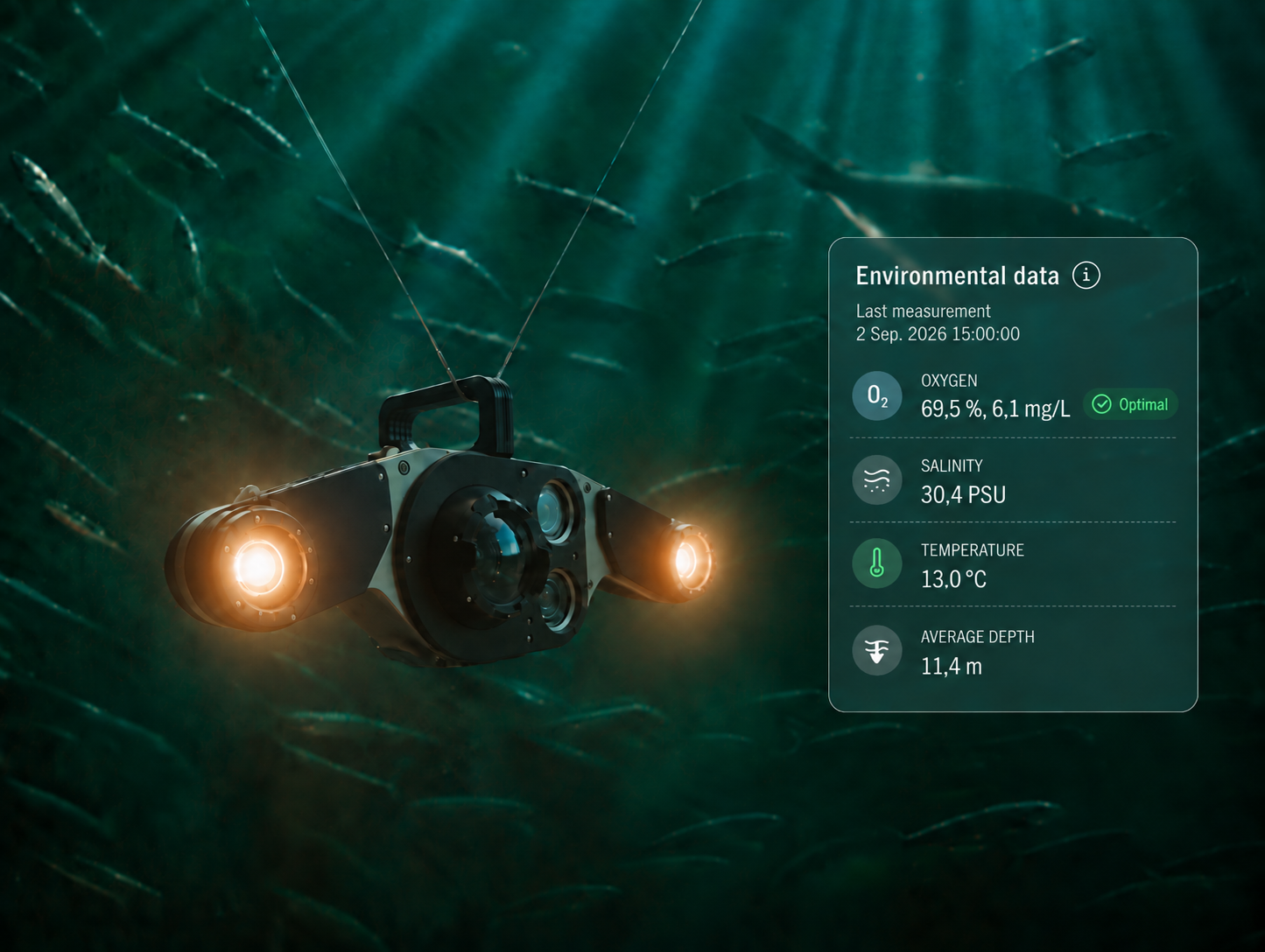
Fish behaviour tells you one part of the story. The environment around the fish can tell you the rest.
With integrated environmental sensors, OptoScale’s Bioscope monitors oxygen, temperature, salinity and depth – while you follow the fish’s behaviour at the same time.
So you don’t just see that something is changing. You get more pieces of the puzzle when trying to understand what may be behind it.
All in one solution
In OptoScale’s web portal, environmental data is shown alongside behavioural signals such as respiration, swimming speed and tilt.
That means less jumping between systems – and a clearer picture of how the fish and the conditions around them develop over time.
And because underwater sensors naturally attract biofouling and algae, we’ve integrated self-cleaning across all sensors – reducing the need for manual cleaning and helping maintain reliable measurements over time.
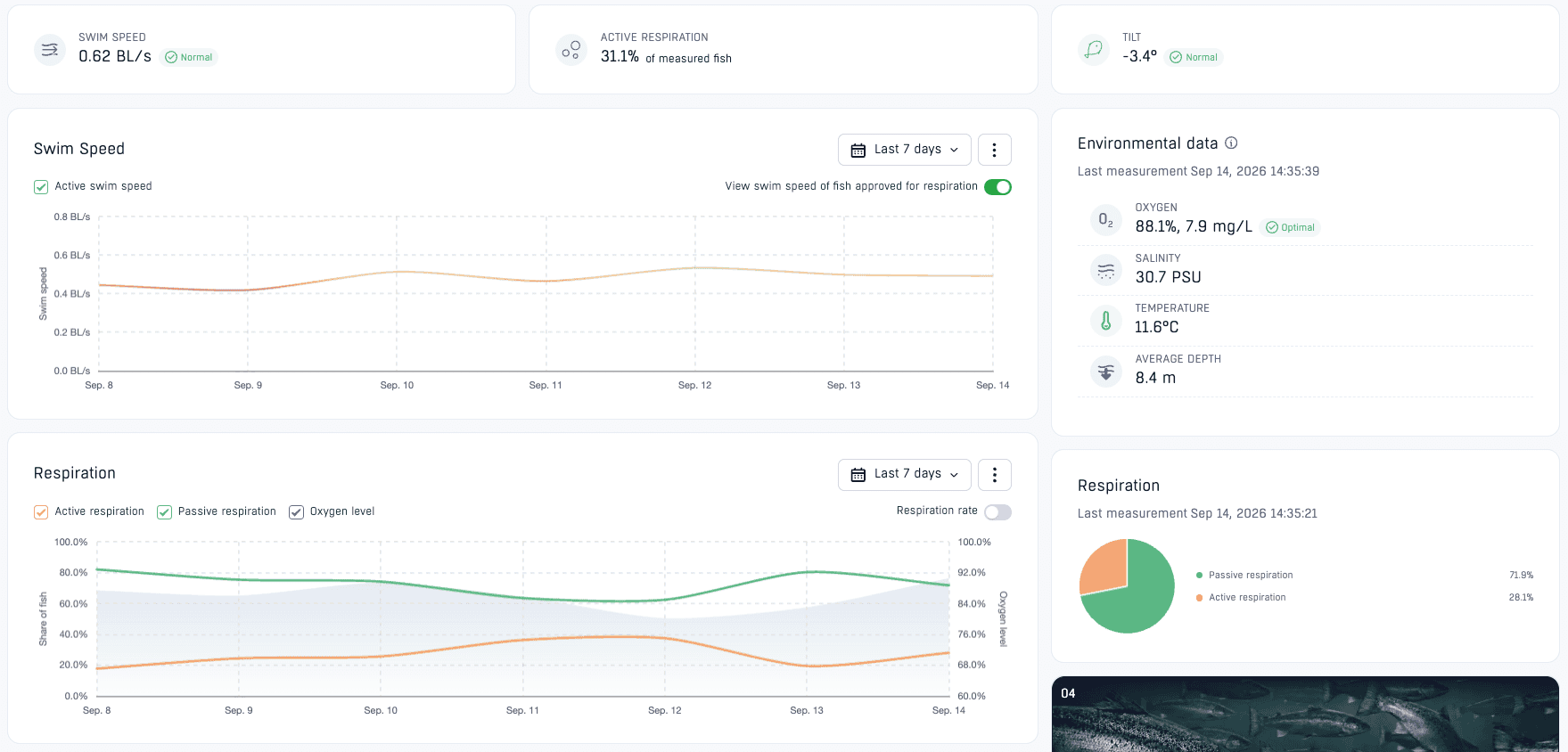
Environmental data and behaviour are shown together in OptoScale’s web portal – making it easier to follow developments and see connections over time.
Perfect for submerged
With submerged farming, temperature, oxygen and other conditions can change with depth.
That’s why it’s valuable to measure the environment in the same place the fish are being monitored.
With environmental sensors integrated into the bioscope, you get oxygen, temperature and salinity measurements from the water around the fish, while depth is recorded at the same time.
Combined with behavioural data, this gives you a more relevant picture of both the fish and the conditions around them.
Less equipment at depth
Because the environmental sensors are integrated into the bioscope, there are fewer separate measuring units, cables and components to manage in the pen.
Right place. More signals. Less hassle.

